
ikukhtina@comaf.co

+48 733 536 841

To understand what is really happening in the berry market, it is not enough to look only at prices during the season. Berries have a short cycle from planting to harvest, and in just 3–5 years the market landscape can completely change. Therefore, to understand short-term trends, one should look at a horizon of 3–5 years, and for major shifts – 7–10 years. Longer than that is too much for berries.
In this article, we will look at international berry trade trends for the key export crops of Ukraine in order to understand where the market is heading.
The most important fact: the global blueberry market has grown sharply. This has created room for new players and reshaped the balance of power. Riding this wave of growth, Peru has come to the forefront, significantly increasing production and exports and “biting off” a share of the market from traditional suppliers, particularly Chile (which fell back to its 2017 level) and Spain.
Among the TOP-5 exporters, only the Netherlands acts as a reseller, while the other countries (Peru, Chile, Poland, Spain) are also major producers.
The problem with blueberries lies in the economics: export volumes are growing, but the price has remained nearly unchanged in recent years. Against the backdrop of global inflation, this means declining profitability. While other berries are getting more expensive, blueberries are becoming less profitable, even though they remain the leader in sales growth among berries.
08 | 040 Fresh cranberries, blueberries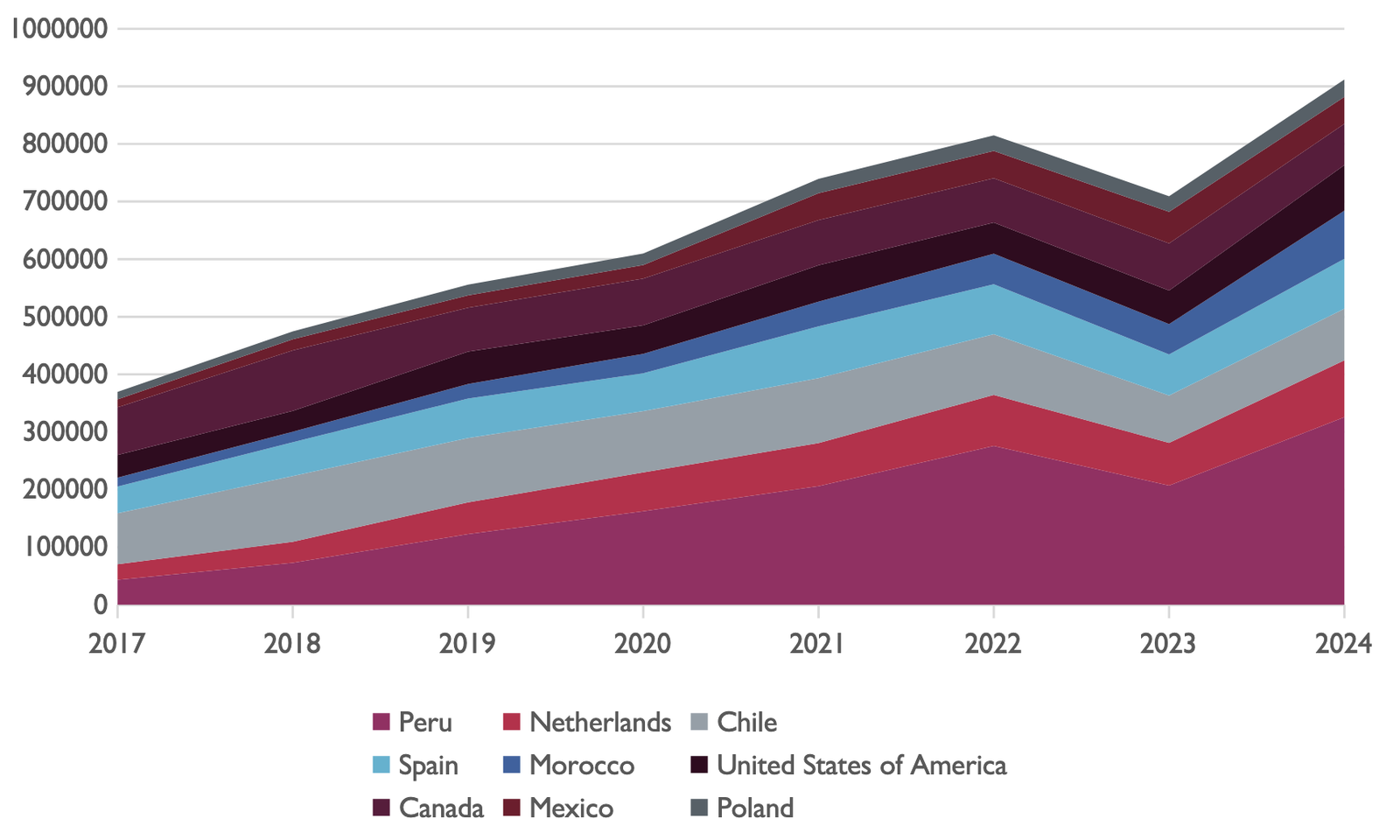
The global fresh raspberry market is growing, but more importantly – over the past seven years it has shifted to a new development model.
The example of Poland is illustrative: it reduced export volumes by about 30%, but doubled their value. The reason lies in the transition to a more advanced model:
This approach requires significant investment and creates an entry barrier: it is becoming increasingly difficult for new farmers to enter the fresh raspberry segment. In practice, the market has shifted from mass “grown – sold” production to a “grown under contract” model.
The main exporters of fresh raspberries are Morocco, Portugal, Poland, Spain, and Mexico. They set the tone in shaping world prices and quality standards.
08 | 020 Fresh raspberries, blackberries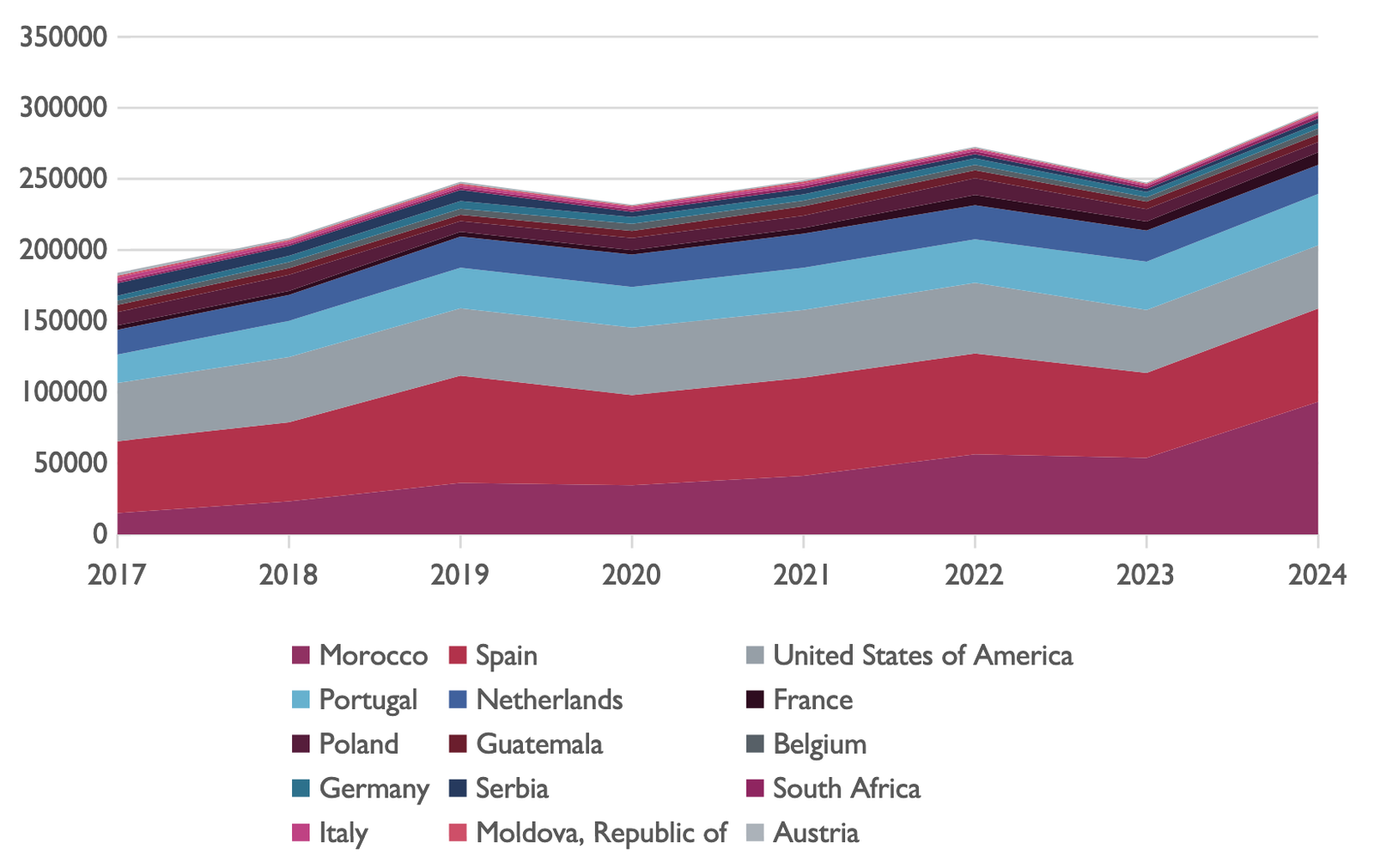
The numbers show: global demand for frozen raspberries has remained steady at around 500,000 tons per year. Unlike fresh berries, this is not a “limitless market.”
The price peak of 2022 caused volumes to fall, and the market needed two more seasons to recover. The logic is simple: frozen raspberries are an ingredient. If they are removed from recipes because of high prices, it is not easy to bring them back quickly.
The experience of 2022–2023 also outlined the price ceiling clearly: the market accepts prices for extra-class frozen raspberries up to €2.8–3/kg. If the price goes above this level, demand drops sharply. This effect influences at least the next two seasons.
There have also been geographical shifts in this segment. Ukraine increased volumes and displaced Serbia, which reduced production to 60,000 tons in 2024. Serbia partly compensates its exports with re-exports from neighboring countries, but it was Ukraine’s product that took its place due to lower prices. This confirms: dumping allows you to quickly gain market share, but it is not a sustainable strategy.
The main exporters of frozen raspberries are Ukraine, Serbia, Poland, Chile, and Bosnia and Herzegovina.
Frozen raspberries and currants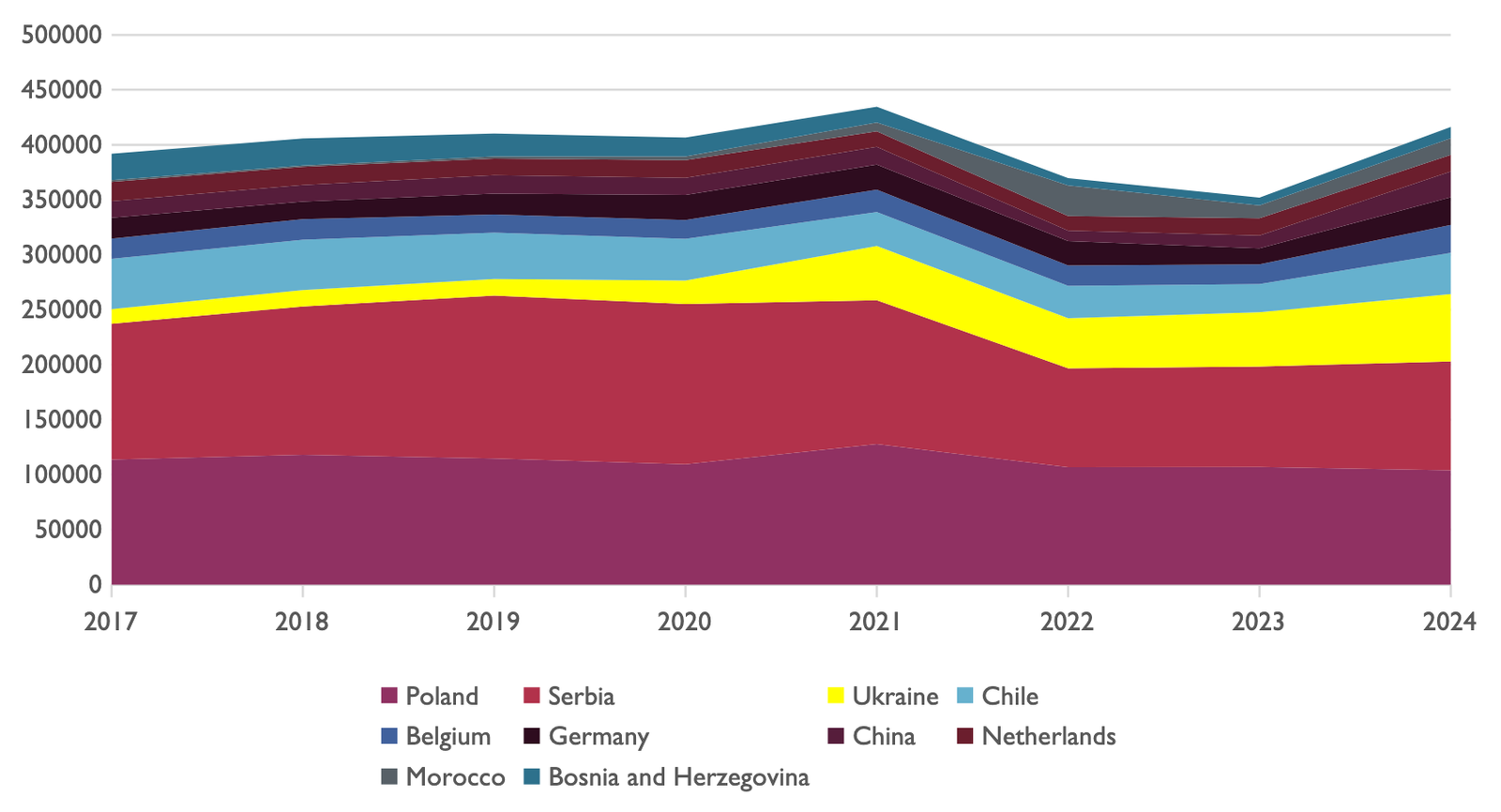
Geography of exports from Ukraine. Frozen raspberries, blackberries, currants.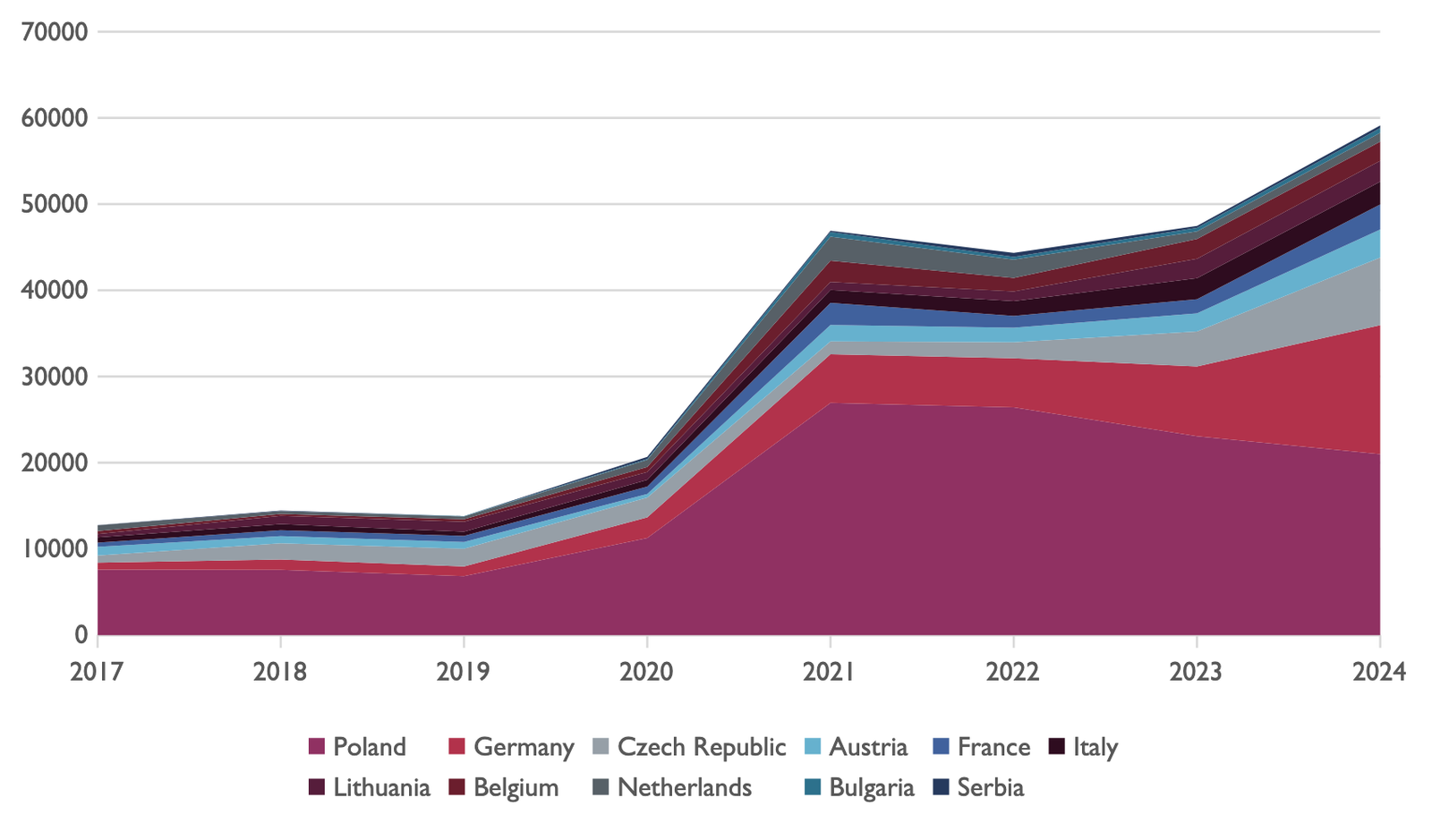
These conclusions show that the future of Ukraine’s berry exports depends not on cheapness, but on the ability to create value – through quality, technology, and new market niches.
